|
Information about plants & gardens for Brisbane & Qld |
|
Magnolia grandiflora
including 'Little Gem', Teddy Bear & other cultivars
Family: Magnoliaceae
Unlike the majority of magnolias cultivated worldwide, Magnolia grandiflora is evergreen. Importantly for Queenslanders, it can be grown in the subtropical climate zones.
In spite of this, it was not commonly encountered here in the past. One wonders why, given the beauty and fragrance of it's large whaite flowers. The original species does grow far too big for suburban gardens, but many inappropriate trees like figs are still to be found in older suburbs.
In recent years, introduction of the smaller-growing 'Little Gem' and a number of other cultivars more appropriate for urban landscapes have introduced M. grandiflora to the general public. Today, M. grandiflora cultivars are popular inclusions in new landscapes in Queensland.
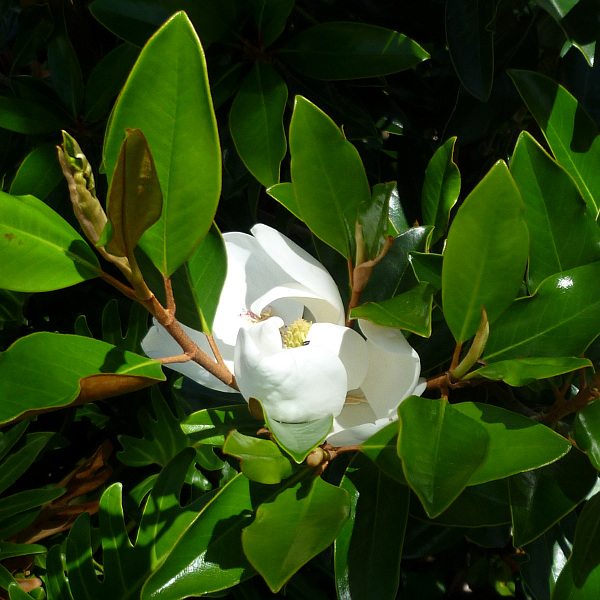
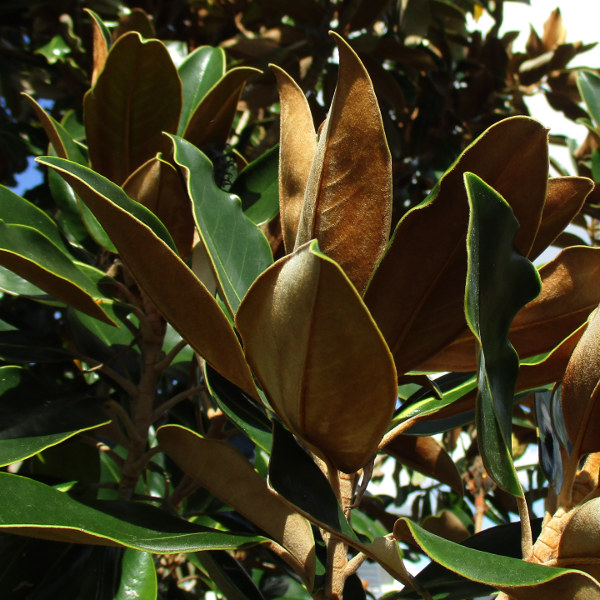
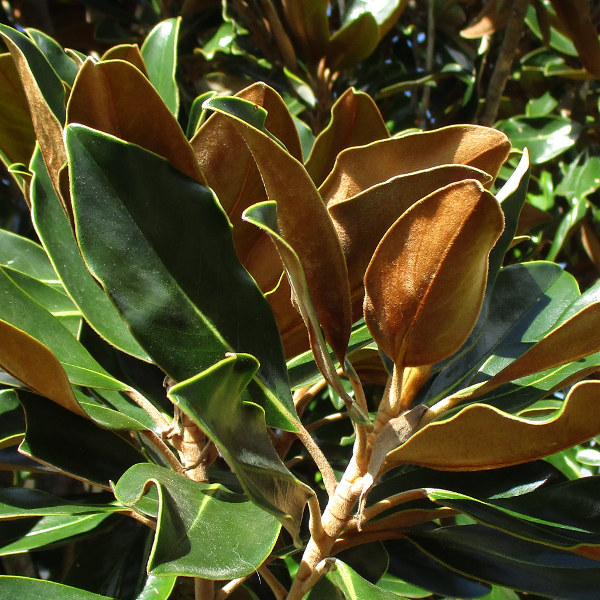
Besides being smaller and/or more compact than the species, many of these new cultivars have the advantage of flowering at a younger age. Cultivars also vary with respect to density of foliage or the development/colouring of the velvety brown undersides of the leaves. The flowers on dwarf cultivars are likely to be somewhat smaller than the species, but still impressive.
You're likely to find 'Little Gem' or some of the more recent cultivar releases in most garden centres in regions where the plants grow. If you're looking for the original species or other cultivars, you may need to find a Magnolia specialist. Check the: Main Magnolia Page.
Magnolia grandiflora in the Landscape
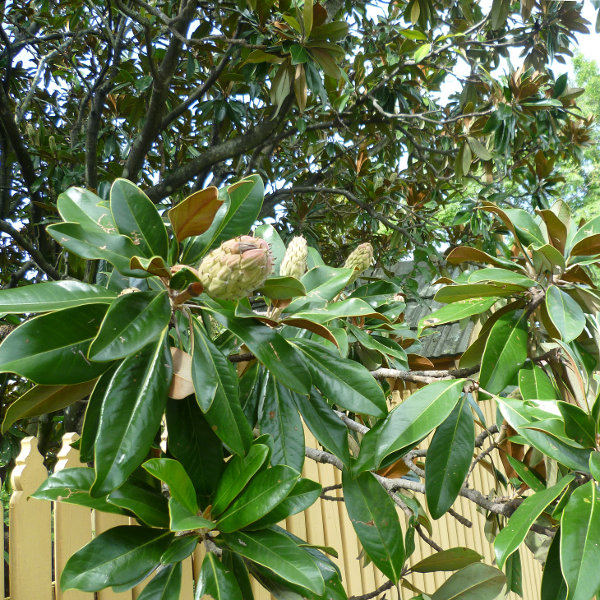
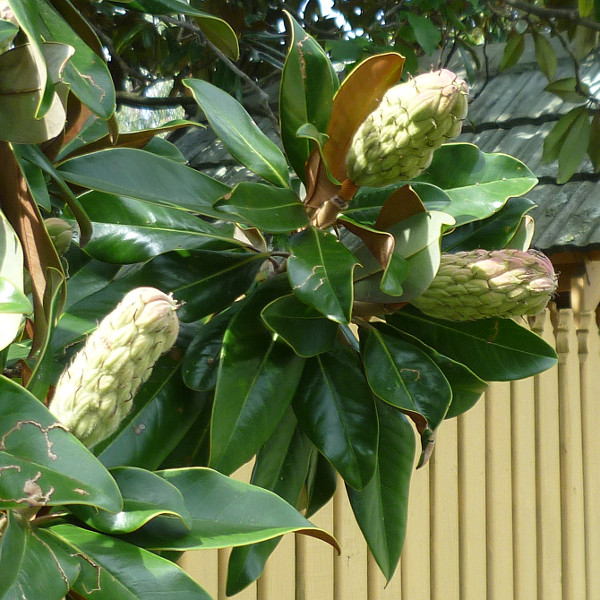
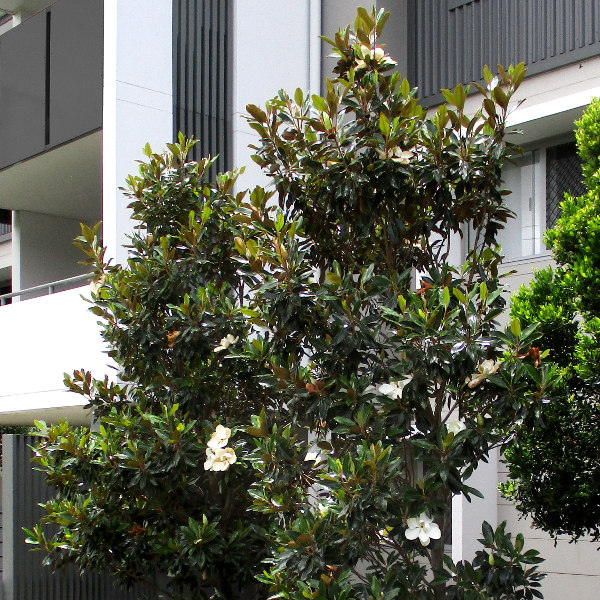
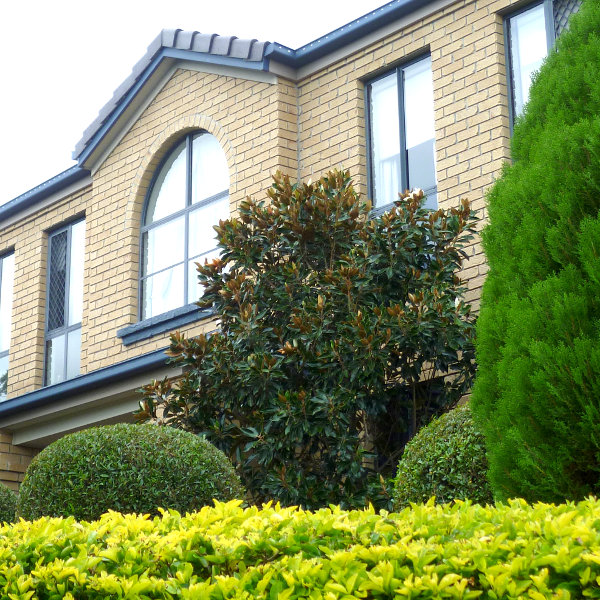
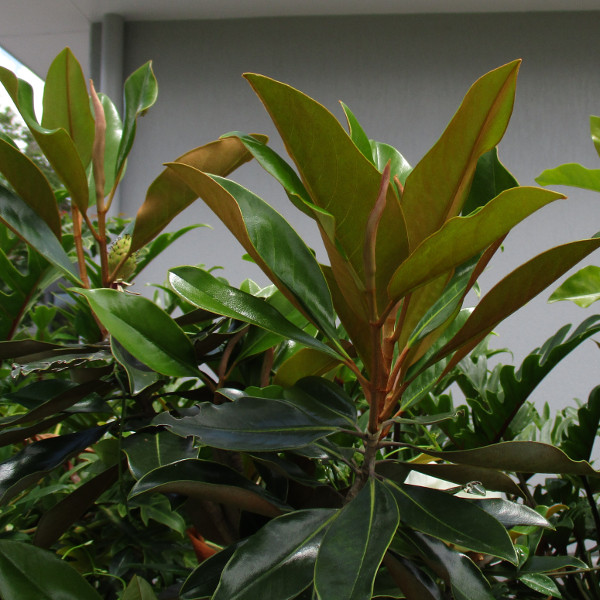
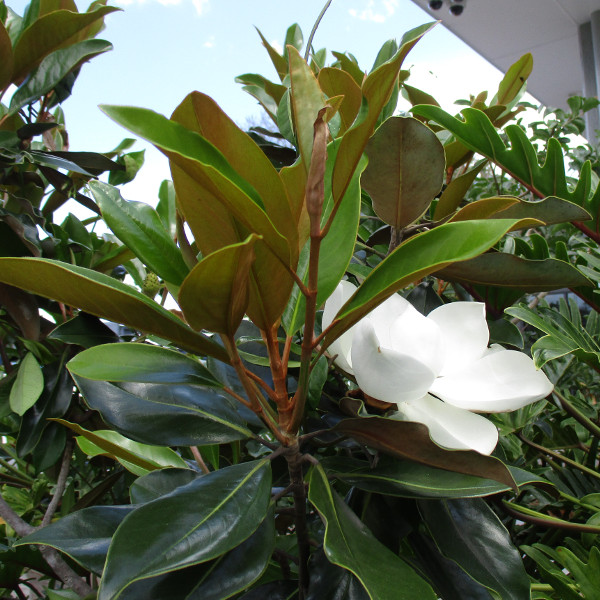
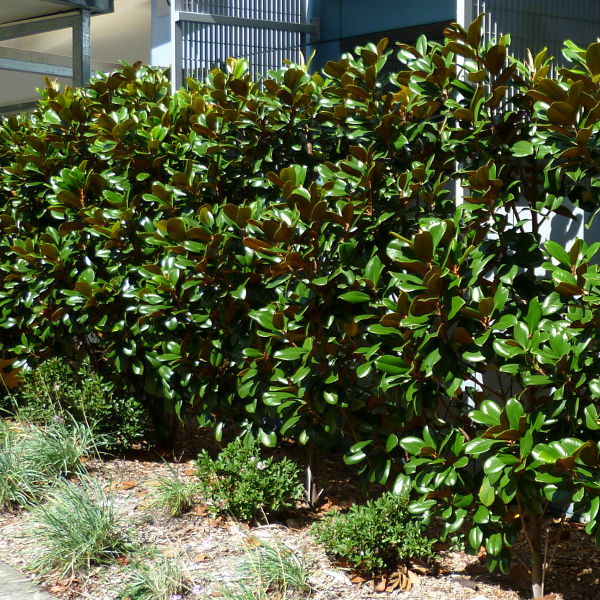
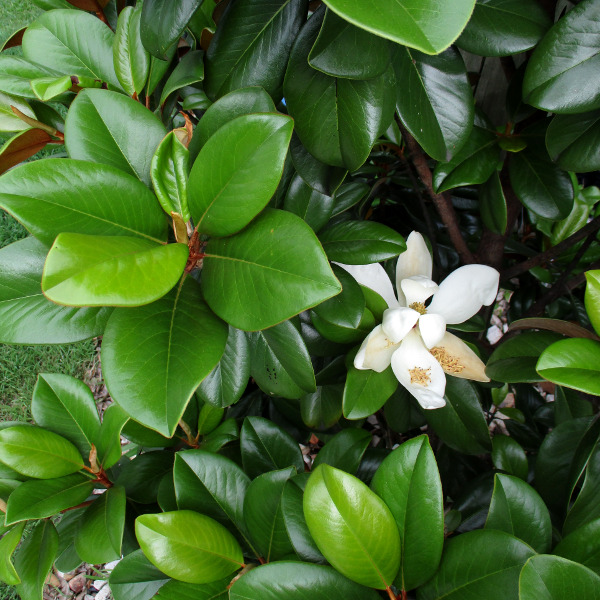
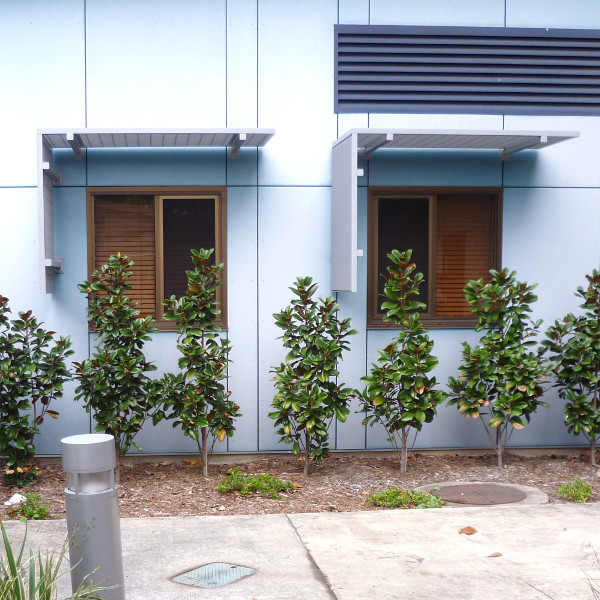
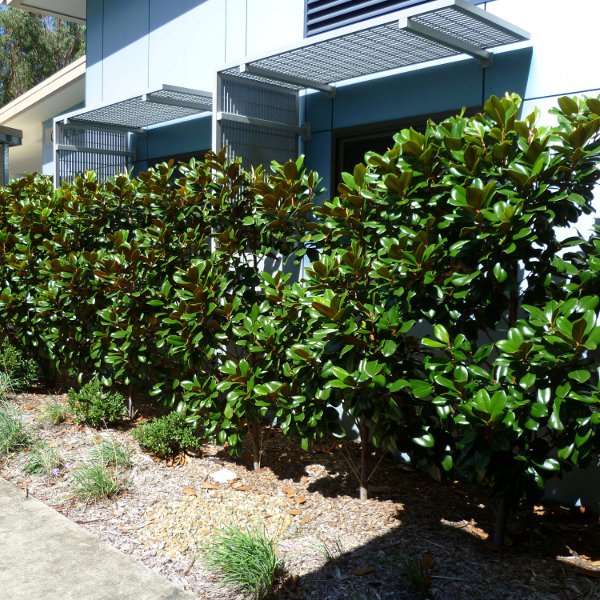
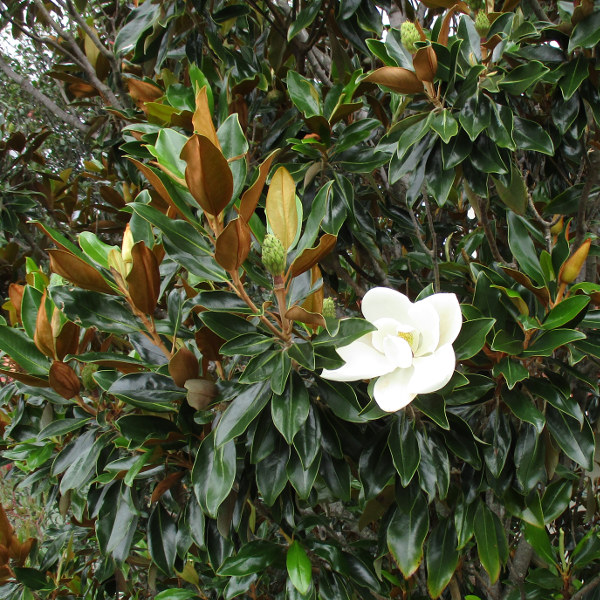
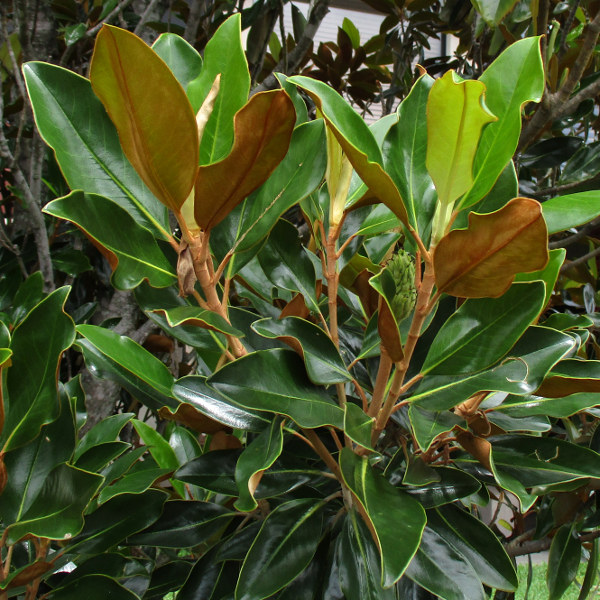
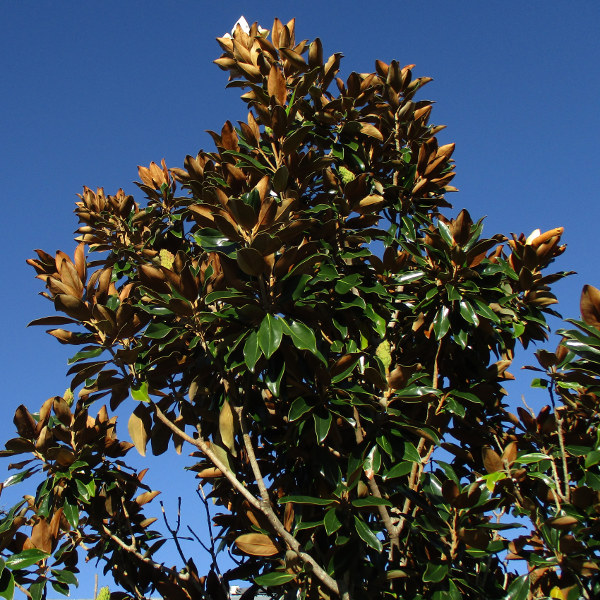
Pictures of various landscape specimens, to give an idea of size, shape and appearance of types likely to be encountered in SE Qld. Click for larger images
.
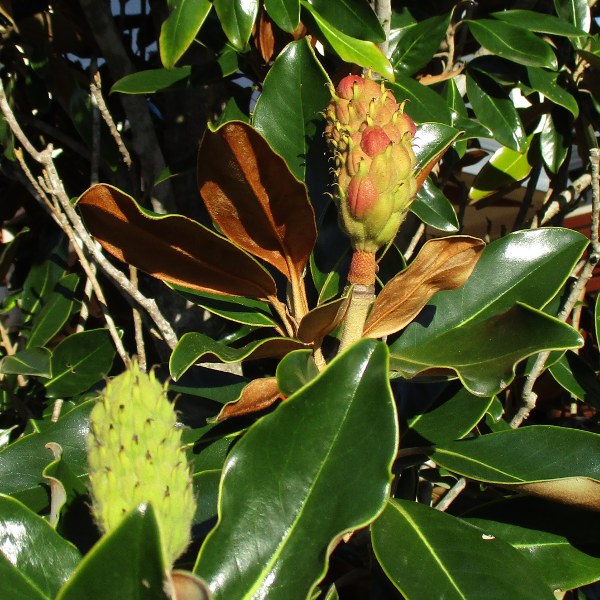
Magnolia grandiflora original species with developing seed heads
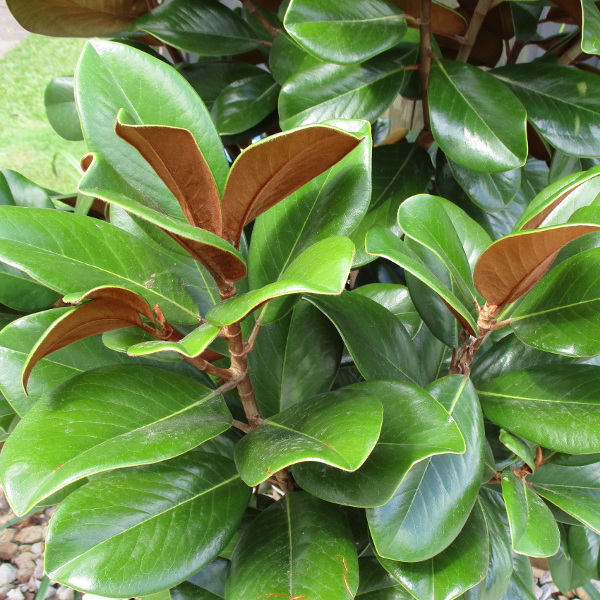
Magnolia grandiflora 'Little Gem'
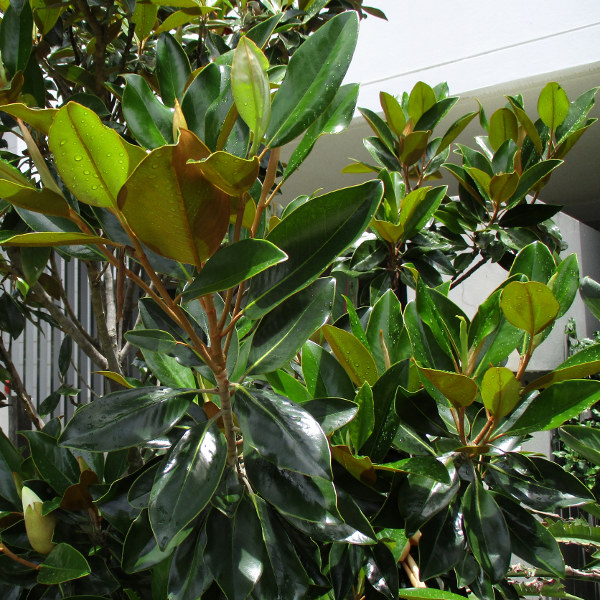
These are unidentified landscape plants, but given their age and appearance, are probably 'Little Gem'. Click for larger images.
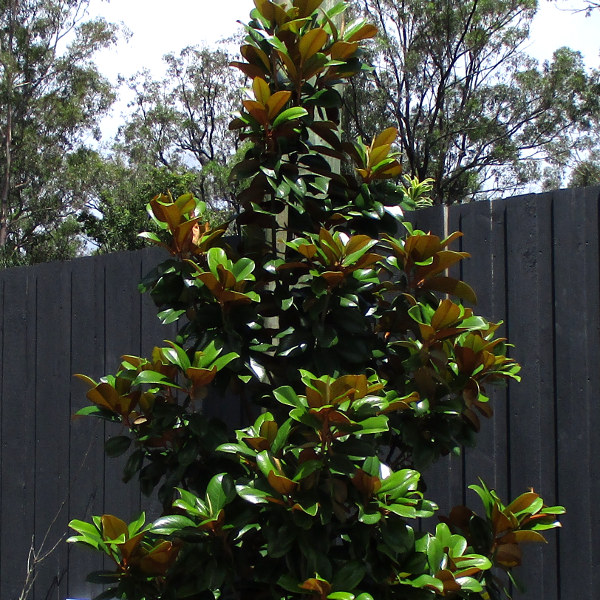
Magnolia grandiflora 'Southern Charm' AKA Teddy Bear
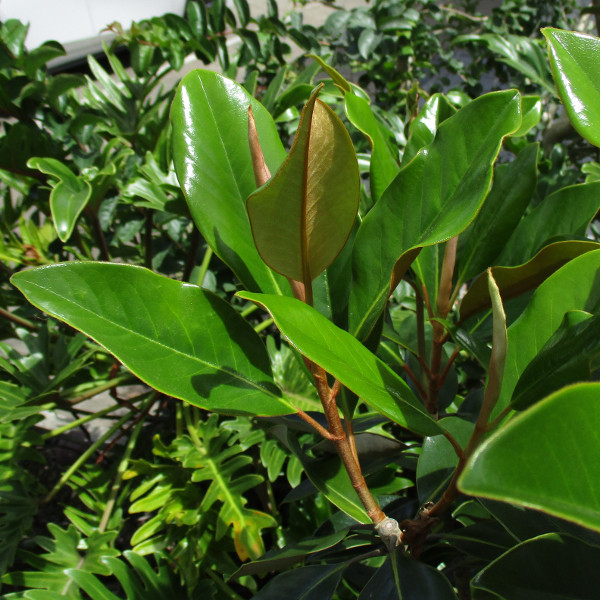
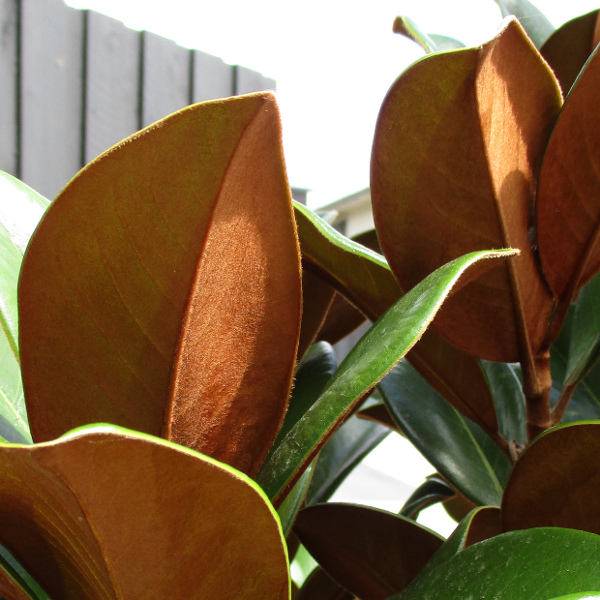
Some of these are unidentified landscape plants, but given their characteristics (smaller leaf size with thick brown felt on the underside, compact habit) are probably 'Southern Charm', sold under the trade name Teddy Bear™. Click for larger images.
Growth rates: the two photos above were taken 20 months apart
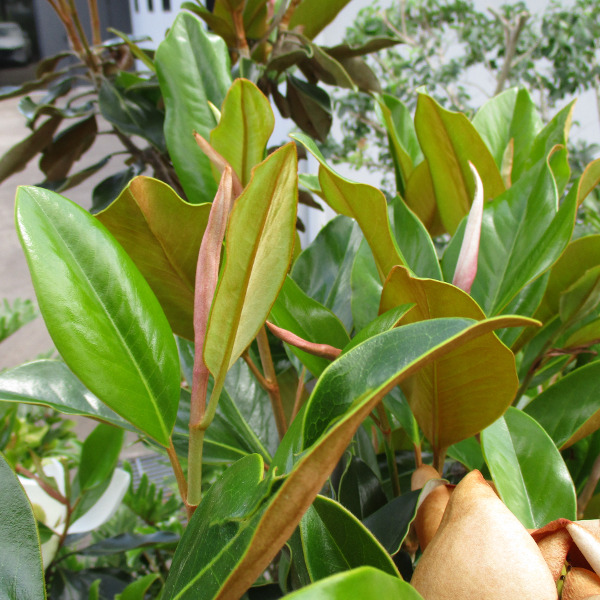
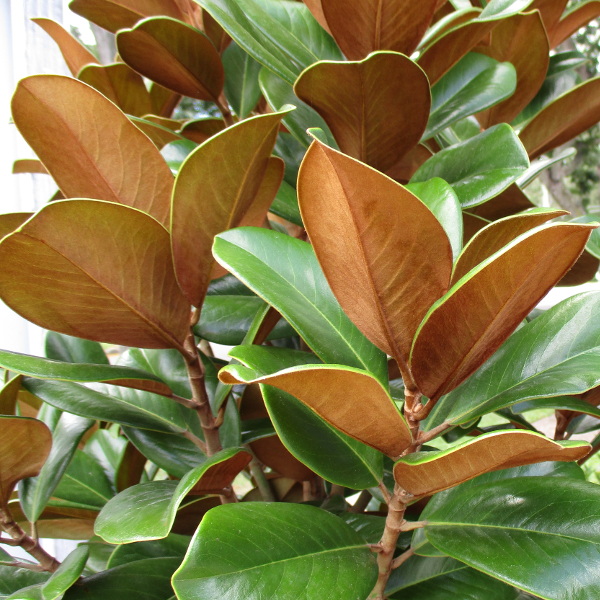
Magnolia grandiflora cultivar ('Kay Parris'?)
This might be the variety 'Kay Parris'. The leaves on this specimen have heavily felted undersides like Teddy Bear™ but a shape more like 'Little Gem'.
 ABN 38 518 961 623 ABN 38 518 961 623 |