Related Topics:Shrubs (general)
|
|
Information about plants & gardens for Brisbane & Qld |
|
|
|
|
|
|
|
|
|||
| |||
Tibouchina are very popular in South East Queensland, with the cultivar 'Alstonville' joining Jacaranda and Poinciana as signature species in gardens of this region.
As with so many plants which are transported and cultivated all over the world, there's quite a bit of confusion over the identity of varieties, and their correct names. Many of the online references are in Portugese which makes it difficult for an English speaker to investigate Brazillian sources of information.
Links to relevant webpages on other sites are given throughout the text. See the bottom of the page for details of printed books and printed jounal articles referred to in the text, and links to more information.

Tibouchinas originate in South America. The word itself is derived from the native name in the Guiana region (the countries to the north of Brazil) (Hazelwood, 1968; Harrison, 1967). Tibouchinas are cultivated widely in Brazil. T. granulosa is called Quaresmeira. T. lepidota is called Sietecueros.
In older Australian and New Zealand literature, Tibouchina is also referred to by the older name of Lasiandra. The most commonly cited species prior to the 1980s is the plant variously referred to as Lasiandra macrantha, Lasiandra semidecandra, Tibouchina semidecandra, Tibouchina semi-decandra. and later, Tibouchina urvilleana. According to The Plant List database, semidecandra and urvilleana are two different accepted species (not synonyms), so it seems that the names semidecandra and urvilleana have become very confused. The correct identity of the common species is still unclear.
'Grandiflora' was a popular variety, having larger flowers. It is still available in Queensland, although it has been eclipsed in popularity by other tibouchinas as outlined below. (You may sometimes encounter reference to a species called Tibouchina grandifolia. This is a synonym of Tibouchina heteromalla).
Although 'Edwardsii' and 'Grandiflora' may have had somewhat more dwarf and compact growth than the species (opinions on the relative merits of each vary somewhat between authors), the "Lasiandras" generally had a poor reputation as plants with straggly growth habit and a need for frequent pruning.
T. urvilleana and some other members of the genus are weeds (or potentially weedy) in some places. For example, it'is one of Hawaii's Most Invasive Horticultural Plants and occasionally escapes the garden in Australia.
A cultivar of Australian origin which is also frequently mentioned is 'Edwardsii'. Victorian nurseryman Edward Edwards crossed 'Grandiflora' and the species to obtain flowers of a deeper richer colour. 'Edwardsii robusta' was another variety selected for large flowers and vigourous growth. (Herbert, 1958; Harrison, 1967; Hazelwood, 1968)

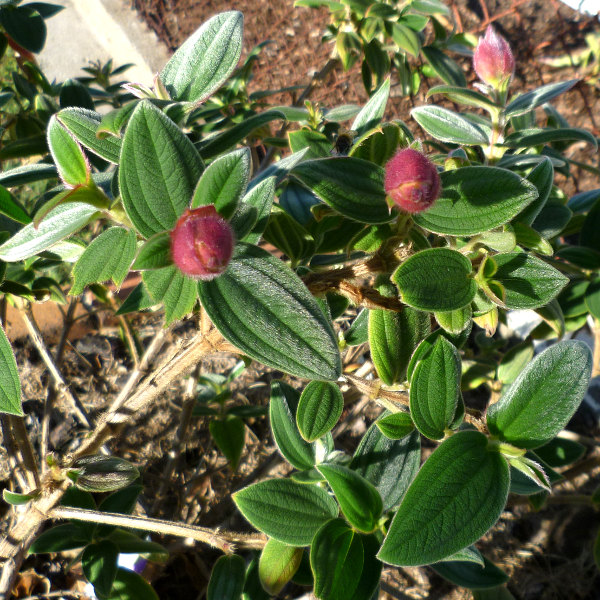

This began when Australian nurserymen made several garden-worthy selections from various seed imported from Brazil in the 1960s. Particularly prominent in the Tibouchina story are the Dunstan family, who selected and marketed 'Alstonville' and several others. Students of horticulture interested in researching the history of 'Alstonville' and other cultivars of the period should consult Dunstan (1982), Burke (1984) and Lake (1996). (See list of references at the bottom of this page).
The superior characteristics of the new plants combined with modern marketing made the tibouchinas one of the most significant groups of flowering shrubs/small trees in Queensland at the end of the 20th century. The following refers to the more commonly grown types commercially available in Australia around that time.
These are exotic plants that were selected for their ornamental qualities from undocumented sources and the exact botanical ancestry of these cultivated types is still hazy in many cases.
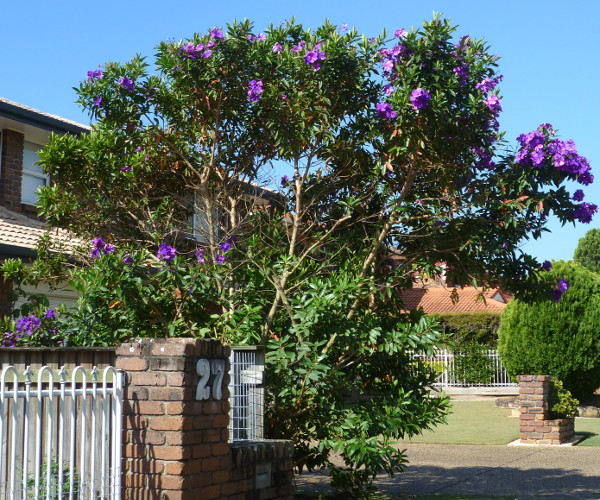
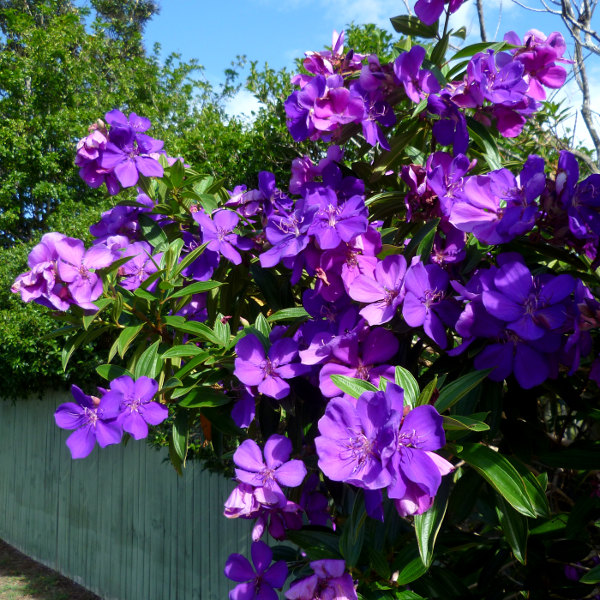
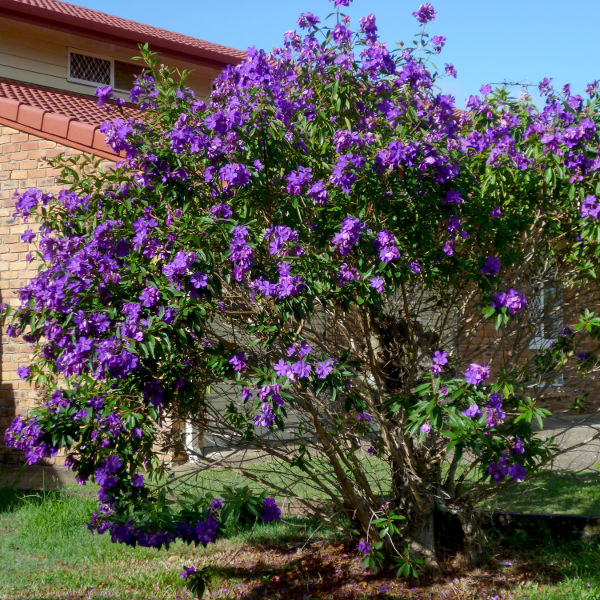
By far the most popular Tibouchina for Brisbane gardens so far, 'Alstonville' can be easily spotted around the suburbs by its rich purple flowers on a bush
Classed as a shrub by some, it can be trained as a small tree with appropriate pruning. Its small and controllable size has no doubt contributed to its popularity in modern gardens, where there is no longer space for grand tropical flowering trees like poinciana.
Although it can produce some flowers in spring, 'Alstonville' typically provides a burst of colour in late summer/early autumn. Its namesake Alstonville (NSW), the town near which this plant was developed, has a Tibouchina festival every year in March when the trees are putting on their best display.
'Alstonville variegata' is a variegated leaf form. If anyone is still producing this cultivar commercially, please get in touch.

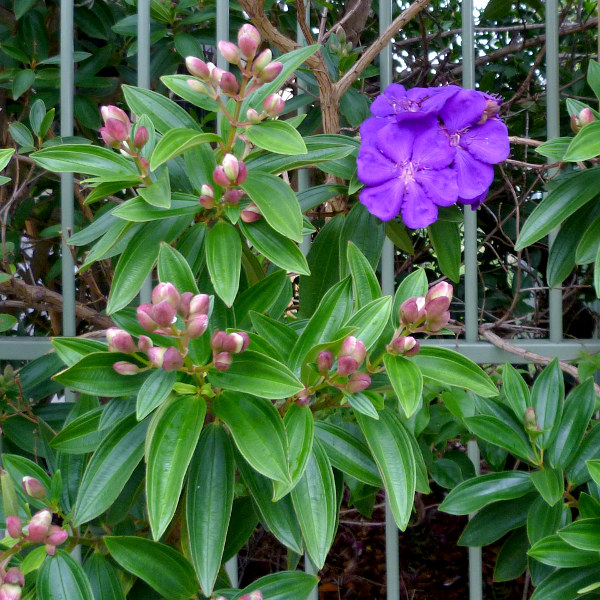
This shrub is much smaller than 'Alstonville', suitable for a garden bed or container. It's been widely available in the nursery industry but mature specimens are rarely seen surviving in local gardens. It's sometimes listed as a variety of Tibouchina heteromalla but whether this is has been scientifically established or merely based on conjecture is not clear.
Another small-growing variety with deep purple flowers with a white eye. Also listed as a T. heteromalla by some but this requires confirmation.
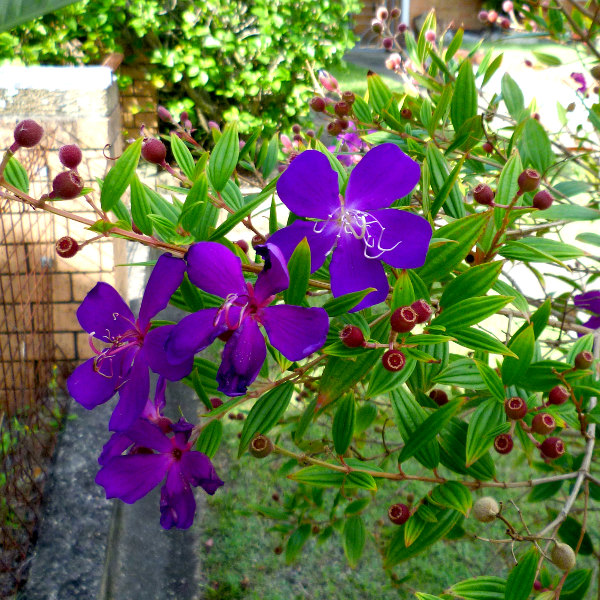
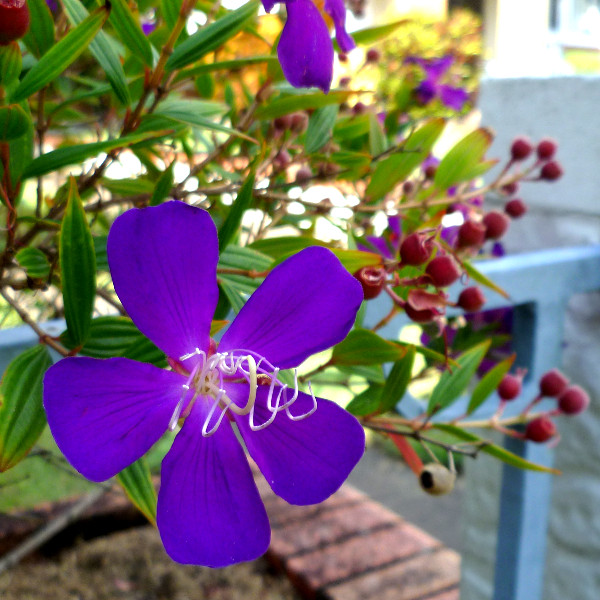
This cultivar has pink flowers (The original species T. granulosa has purple flowers), and will grow into a tree if left unpruned.
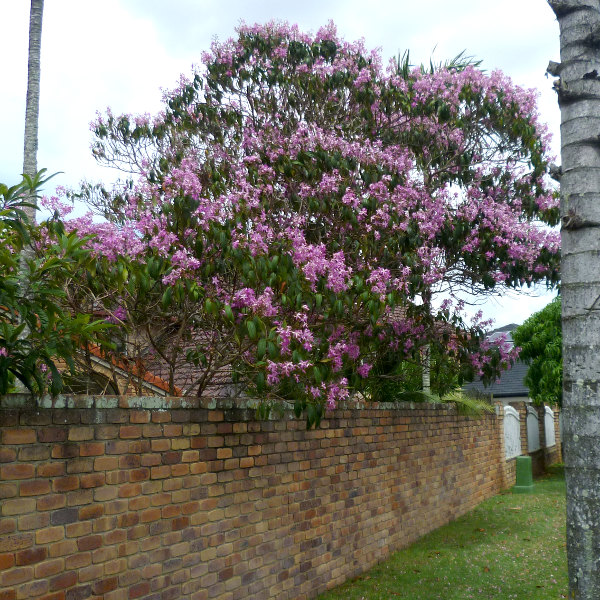
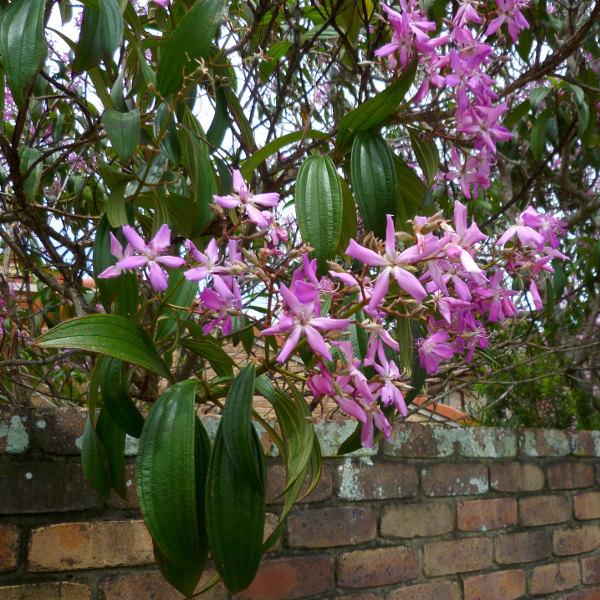
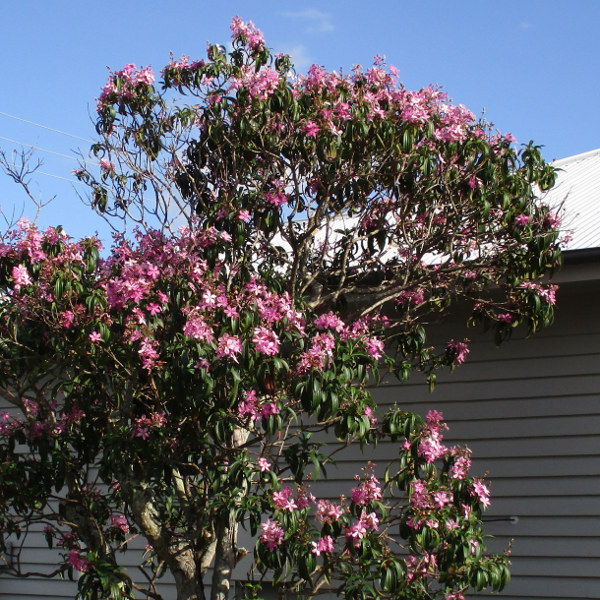
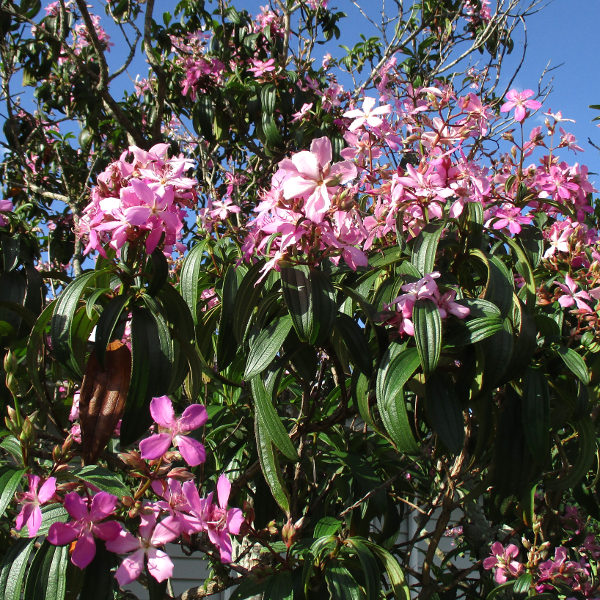
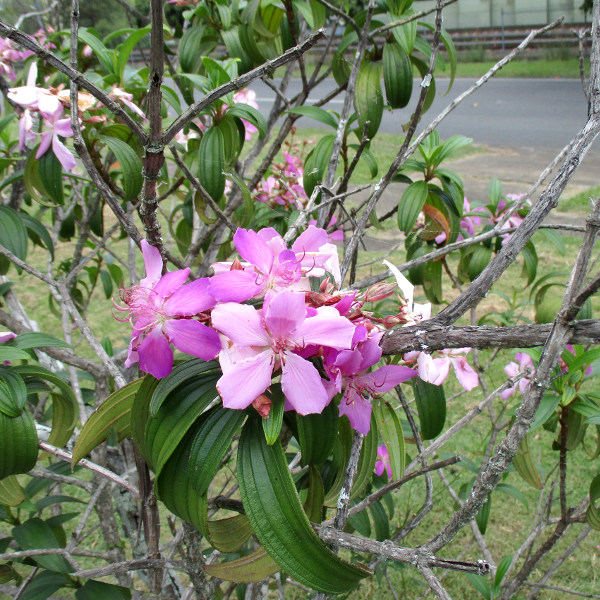
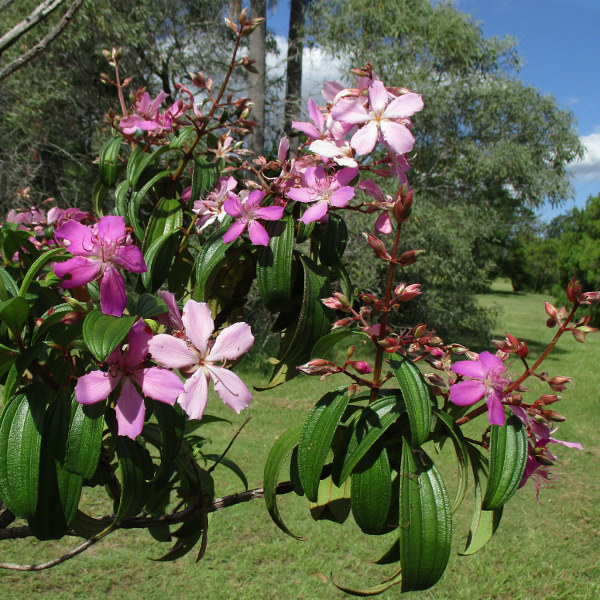
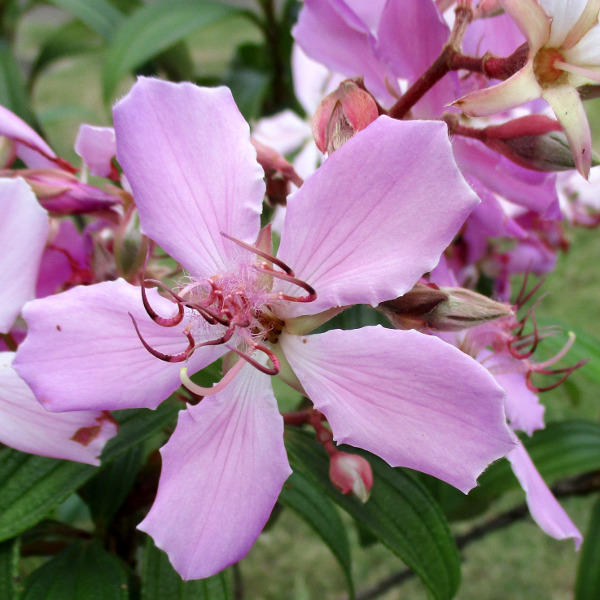
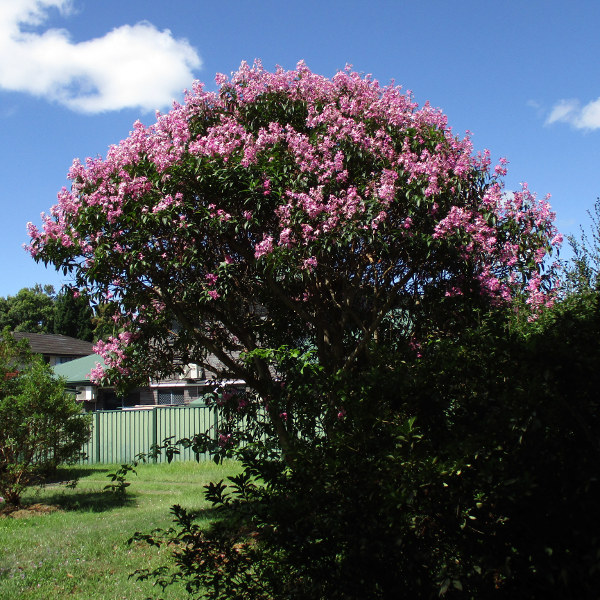
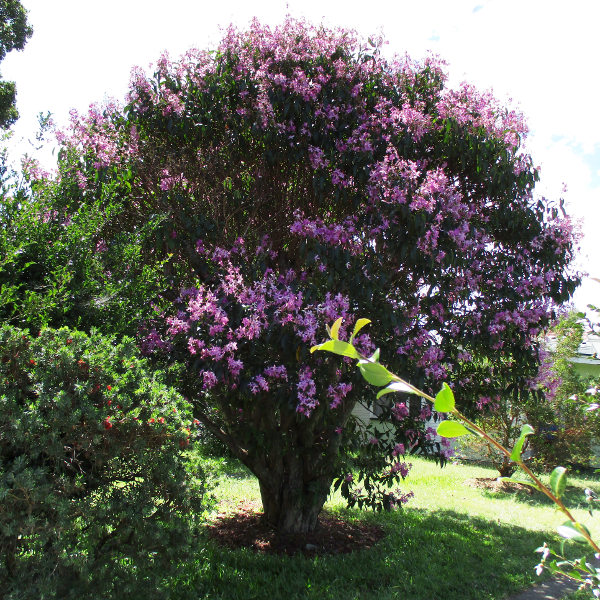
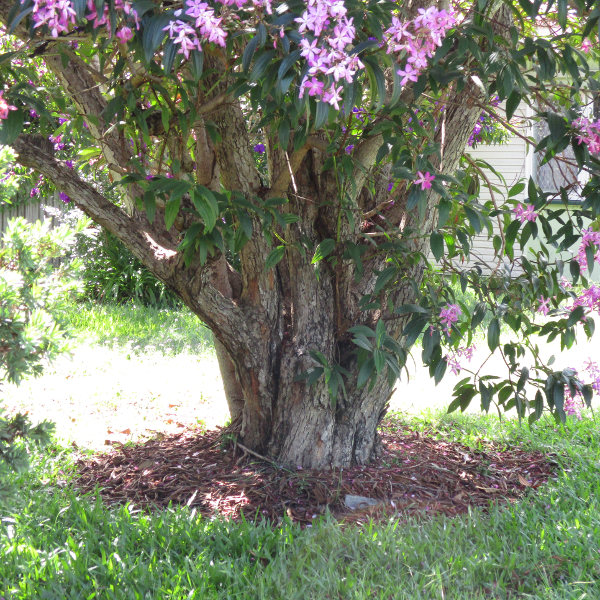
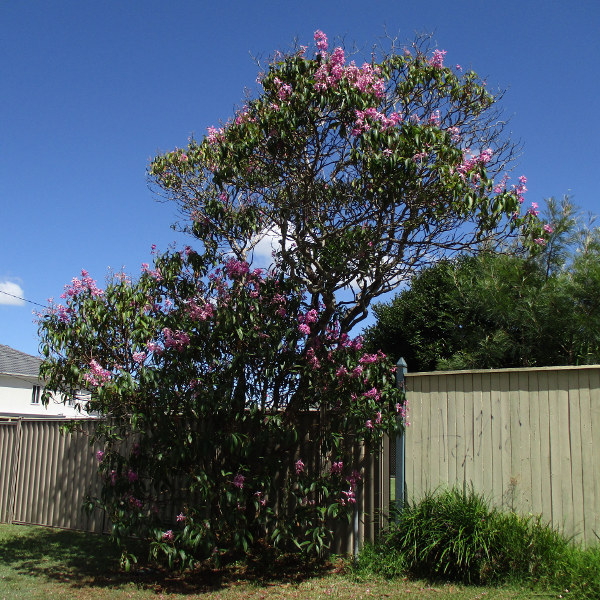
One of the cultivars from the Dunstan family of the 'Alstonville' period, this shrub's flowers open white and darken to through pink with age.
Hazelwood (1968) describes a Brazilian species called T. bicolor, the flowers of which start white and turn to purple as they age. More recent publications refer to a T. mutabilis which has similar characterstics. Perhaps 'Noeline' is a cultivar or maybe just the regular species.
A number of Tibouchinas have been introduced into the marketplace in Australia over the years, but have failed to gain as much popularity as those above. These include:
A trend throughout modern horticulture has been toward breeding ever more compact plants suitable for small gardens and especially containers. 'Groovy Baby'PBR (Plant Breeders Rights Application, IP Australia in .doc format) is one of the first of the most recent wave of new tibouchina cultivars in this vein. It has been promoted as having a compact habit, long flowering season and relative cold tolerance. It remains to be seen whether this or other new cultivars can stand the test of time to become garden staples.
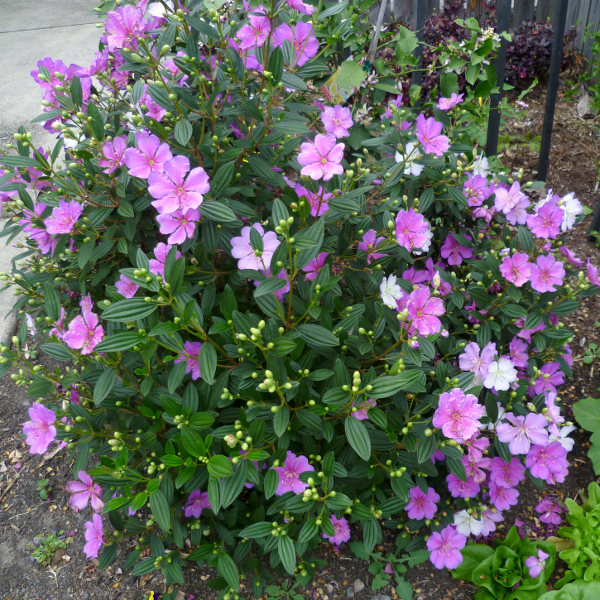
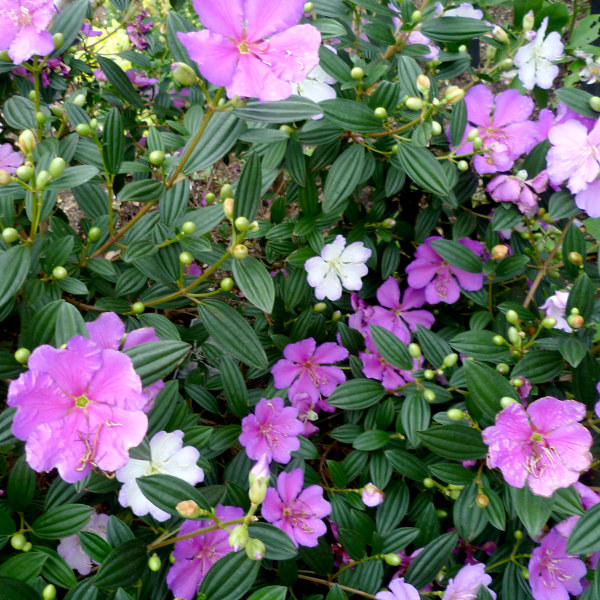
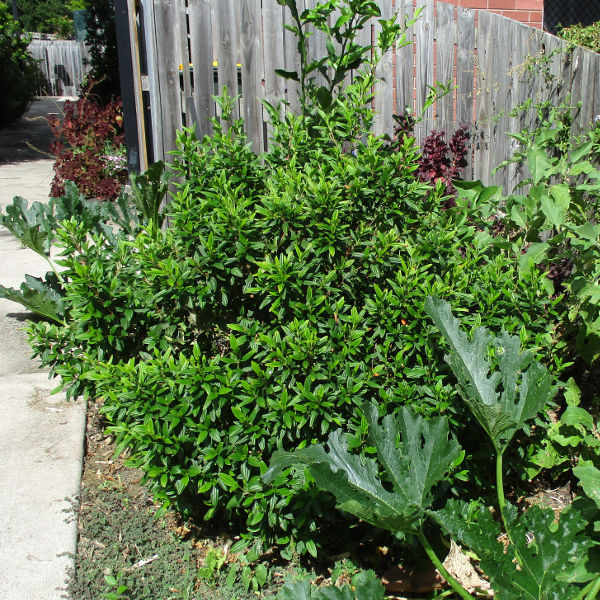

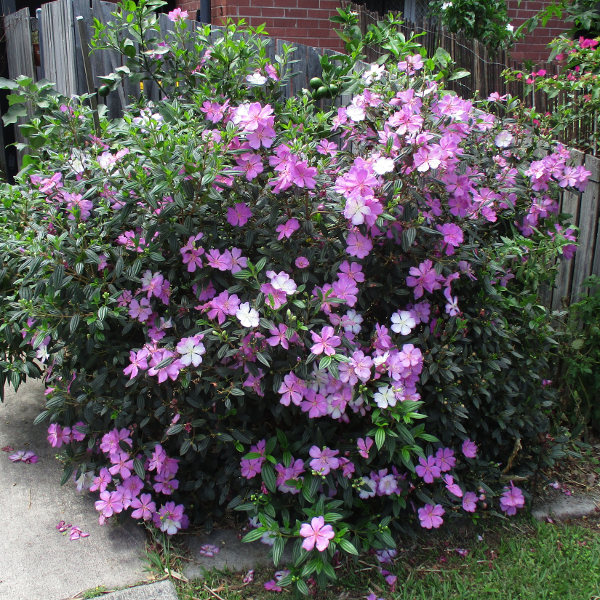
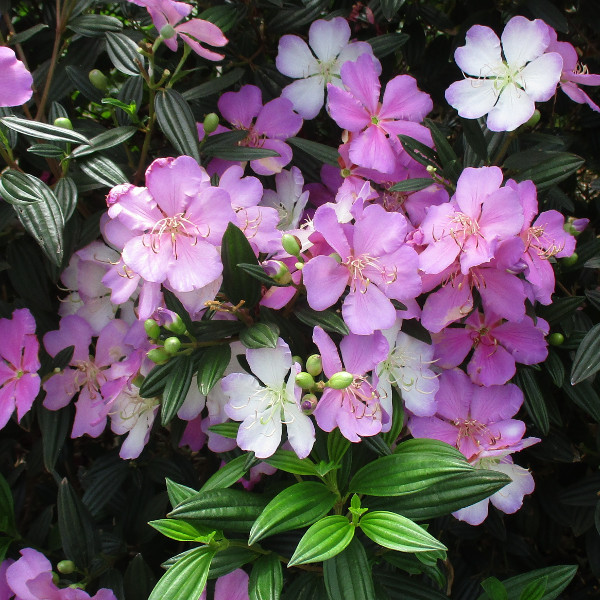
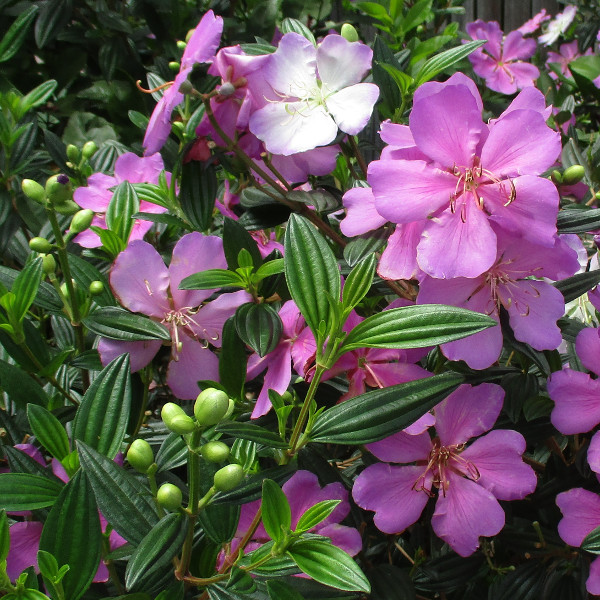
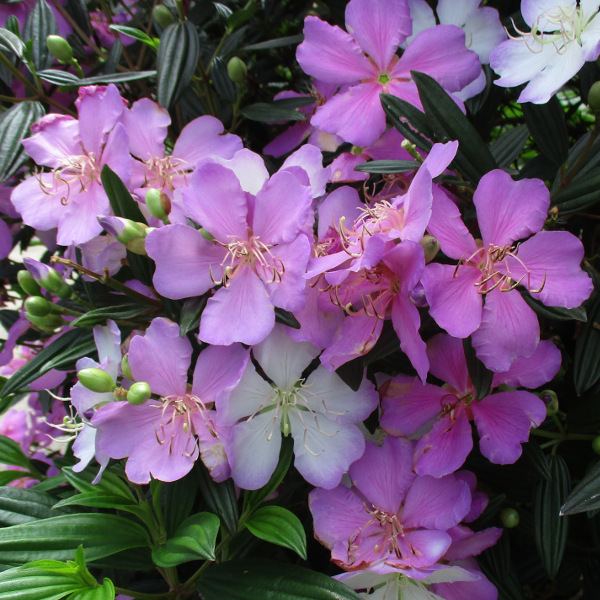
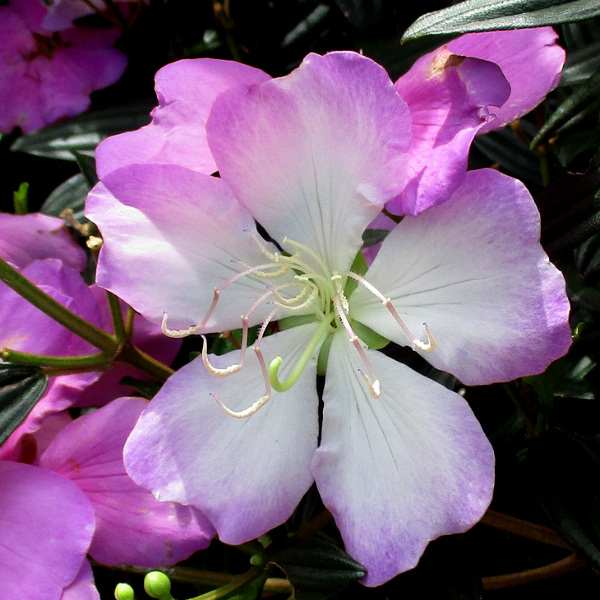
In the literature, gardeners are generally advised to plant Tibouchinas in well drained, acidic soils and to supply plenty of water and fertiliser. However, 'Alstonville' is seen all over Brisbane in situations where soils are undoubtedly less than ideal and where they're unlikely to be receiving any supplemental water or fertiliser after establishment. In this region, 'Alstonville' can be considered relatively tough, trouble-free plants for average garden conditions.
Of course, they are more likely to perform at their best with a little attention. They are widely believed to like an acid soil so this should be kept in mind when considering fertilisers, potting mixes and soil amendments.
The best time for major pruning in frost-free climates is immediately after a flowering flush. The main flowering period in Queensland is autumn. Pruning in summer could delay flowering until winter/spring.
The small varieties ('Jules' etc) seem to be fussier about conditions and often fail in normal garden conditions. They seem to do best were they have good soil without a lot of competition from tree roots. Save them for the best spots in the garden, where you can provide extra water if necessary. Alternatively, grow the super-small types in pots.
As indicated above, Tibouchinas are available in a range of growth forms, so you can select a variety to suit your needs whether it is a small flowering tree, a shrub or groundcover. You can also manipulate the form to some extent depending on how you prune. The very dwarf cultivars are suitable for growing in containers.
In terms of style, although the tibouchinas may be classed as "tropical" in terms of their climatic range, the overall look is not particularly "tropical". The flowers, occupying the white - pink - purple range, are "pretty" rather than truly "exotic" in appearance. These trees and shrubs would fit well into a traditional landscape styled after European or North American gardens, but where it's too hot to grow classics like Rhododendron or Prunus. They would also suit a cottage-style garden or simply a purple-flowered colour scheme.
Possible misspellings: Tibochina, tibachina, tiboshina, tibashina.


|
|
|
|
|
|
|
|
© Calyx Horticultural Services ABN 38 518 961 623
|